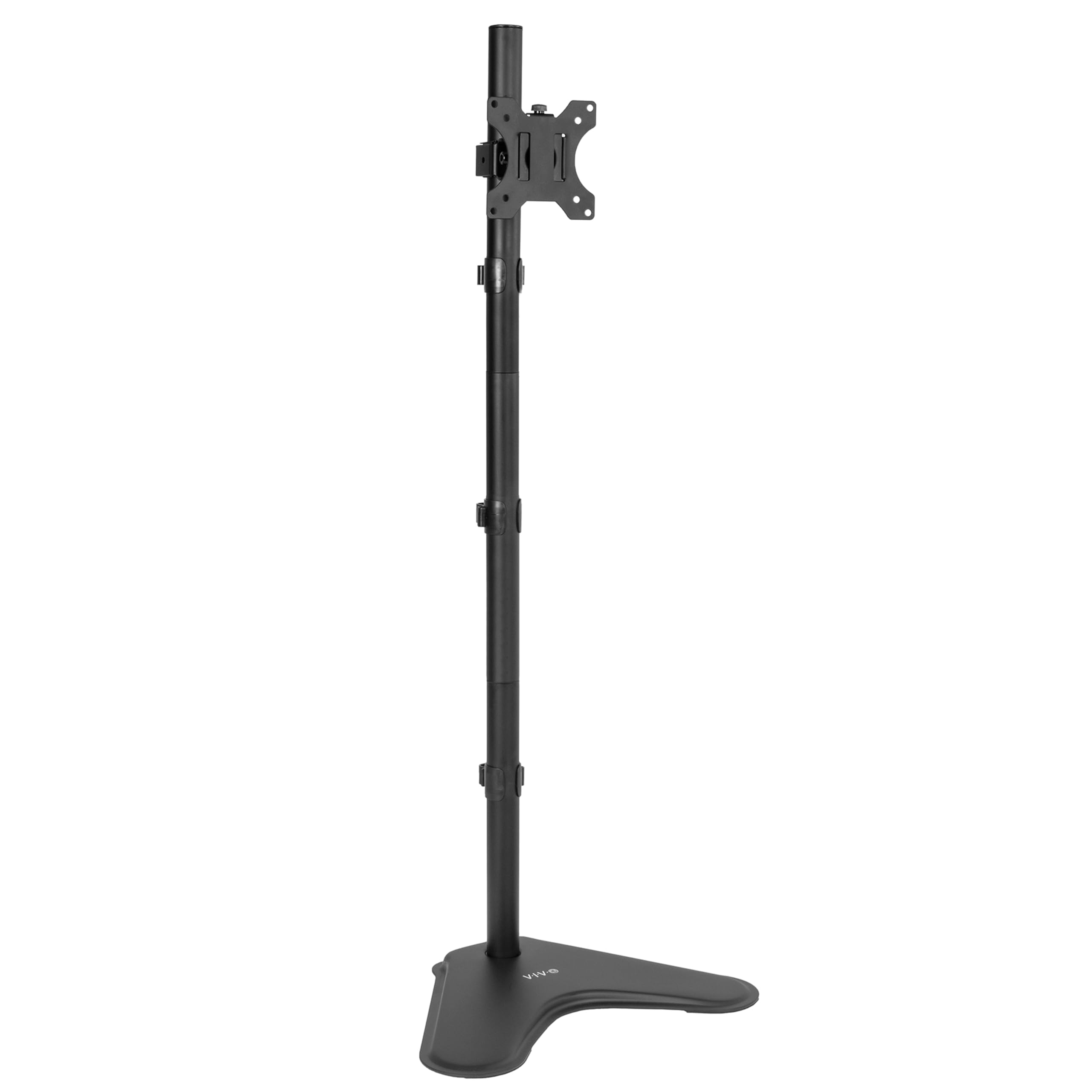
The VIVO Extra Tall Single Monitor Desk Stand is a freestanding option for raising one screen above the desktop, with a 40-inch center pole and an articulating VESA bracket.
This VIVO Extra Tall Single Monitor Desk Stand review focuses on fit, positioning, and the practical tradeoffs of a stand whose height adjustment is intended for occasional setup changes rather than frequent movement.
VIVO Extra Tall Stand Review Summary
The quick verdict
5,000+ ratings
Read Amazon ReviewsVIVO STAND-V011H Extra Tall Single Monitor Desk Stand
A freestanding option for buyers who want to elevate one compatible monitor and adjust its viewing angle without clamping a mount to the desk.
- Designed for one monitor between 13 and 27 inches, up to 22 pounds, with a 75×75 mm or 100×100 mm VESA mounting pattern.
- A tall 40-inch center pole supports a high monitor position on a freestanding steel base.
- The bracket provides tilt from +45° to -45°, 180° swivel, and 360° rotation for landscape or portrait orientation.
- Vertical height adjustment is made along the center pole by loosening and tightening the bracket bolt; it is not designed for fluid, frequent repositioning.

Pros
- The 40-inch pole provides substantial vertical reach for setups that need a high screen position.
- Freestanding construction avoids relying on a desk-edge clamp or a compatible desk thickness.
Consider before buying
- The 13-to-27-inch and 22-pound limits rule out larger or heavier screens.
- Height changes require loosening and retightening a bolt, which makes frequent repositioning less convenient.
Read the full review summary
The STAND-V011H combines a weighted freestanding base with a tall pole, cable management, and a monitor bracket that tilts, swivels, and rotates.
It suits a buyer who wants a higher screen position while keeping the monitor supported from the desk itself instead of mounting it at the desk edge.
Compatibility depends on more than screen size: the monitor should be 13 to 27 inches, weigh no more than 22 pounds, and have a 75×75 mm or 100×100 mm VESA pattern.
The main compromise is that changing height requires loosening and retightening a bolt, so this is a better fit for a set-and-leave position than for repeated vertical adjustments throughout the day.
The buying factors
VIVO Extra Tall Stand Scorecard
Editorial scores reflect listed features and buyer fit; they are not laboratory measurements or customer ratings.
Monitor compatibility
The supported 13-to-27-inch range and 22-pound limit cover many single-monitor setups, provided the screen has one of the listed VESA patterns.
Vertical reach
The 40-inch pole is the defining feature for buyers who need more elevation than a typical low-profile desktop riser.
Viewing-angle adjustment
Tilt, swivel, rotation, and height positioning offer useful setup flexibility, though the height change itself requires a tool-assisted bolt adjustment.
Position flexibility
The freestanding tabletop design avoids a desk-edge clamp, but the base still needs a suitable area on the work surface.
Cable tidiness
Included cable management helps route cords along the stand and keep them from spreading across the desk.
Setup convenience
The open-top VESA plate and included assembly hardware are intended to simplify mounting, while initial assembly and bracket adjustment still take some setup.
Key Features and Specifications of VIVO Extra Tall Stand
- Designed for one monitor between 13 and 27 inches, up to 22 pounds, with a 75×75 mm or 100×100 mm VESA mounting pattern.
- A tall 40-inch center pole supports a high monitor position on a freestanding steel base.
- The bracket provides tilt from +45° to -45°, 180° swivel, and 360° rotation for landscape or portrait orientation.
- Vertical height adjustment is made along the center pole by loosening and tightening the bracket bolt; it is not designed for fluid, frequent repositioning.
- Cable management is included to help keep monitor cords organized along the stand.
- An open-top VESA plate system and assembly hardware are provided for installation.
- The stand is listed with a three-year warranty.
Pros and Cons of VIVO Extra Tall Stand
Pros
- The 40-inch pole provides substantial vertical reach for setups that need a high screen position.
- Freestanding construction avoids relying on a desk-edge clamp or a compatible desk thickness.
- Tilt, swivel, rotation, and portrait or landscape positioning support a tailored viewing angle.
- The open-top VESA plate is designed to make attaching the monitor more manageable.
Consider before buying
- The 13-to-27-inch and 22-pound limits rule out larger or heavier screens.
- Height changes require loosening and retightening a bolt, which makes frequent repositioning less convenient.
- A freestanding base occupies desktop area, so measure the intended footprint and available space before choosing it.
Who Should Buy VIVO Extra Tall Stand?
Good fit
Consider the VIVO Extra Tall Stand if you need one compatible monitor raised well above the desktop and prefer a base-supported stand to a clamp-mounted arm.
Its tall pole and adjustable viewing angles make it suited to a fixed workstation where you can set the screen height and leave it there.
Before buying, check the monitor’s weight, diagonal size, and VESA hole spacing. Also consider the desk area available for the base and whether your preferred screen position can be established with the bolt-adjusted bracket.
Who should skip it
Look elsewhere if you have a screen larger than 27 inches, heavier than 22 pounds, or without a 75×75 mm or 100×100 mm VESA pattern.
This model is also a poor match if you expect to raise and lower the monitor repeatedly during the day.
How the VIVO Extra Tall Stand Fits a Single-Monitor Setup
A tall pole for a deliberate screen position
The 40-inch pole gives this stand its clearest purpose: placing one monitor noticeably higher than a conventional low riser can.
That reach may help when a workstation needs an elevated display position, but the right placement depends on the user, chair, desk, and screen.
Treat the pole as positioning range, not a guarantee of ergonomic comfort; set the monitor so the viewing angle works for your own posture.
Check the monitor and VESA fit first
The supported screen range is 13 to 27 inches and the weight limit is 22 pounds.
The mount also depends on a square 75×75 mm or 100×100 mm VESA pattern on the monitor’s back, so verify the hole spacing and the monitor’s weight before ordering. Screen diagonal alone does not establish compatibility.
Adjustability with a set-and-leave rhythm
The bracket can tilt, swivel, and rotate, making it possible to orient the display in portrait or landscape and refine its angle after installation.
Height adjustment takes loosening and tightening the bracket bolt, however, and the design is not intended for fluid, frequent vertical movement.
This works best when the screen’s main height is settled during setup, with angle adjustments available as needed.
Freestanding support and desktop planning
A base-supported stand does not require a desk-edge clamp, which can be useful when the desk edge or underside makes clamping awkward. In exchange, the base uses surface area on the desktop.
Check the space where the pole and base will sit, and leave room for the display, keyboard, and other items in your normal layout.
Cable management can help organize the monitor cords around the stand once the position is settled.
Alternatives to VIVO Extra Tall Stand
Computer Monitor Arms alternative
20,000+ ratings
Read Amazon ReviewsVIVO STAND-V001 Single Monitor Desk Mount
Choose the STAND-V011H if freestanding support and extra pole height matter more than frequent height changes.
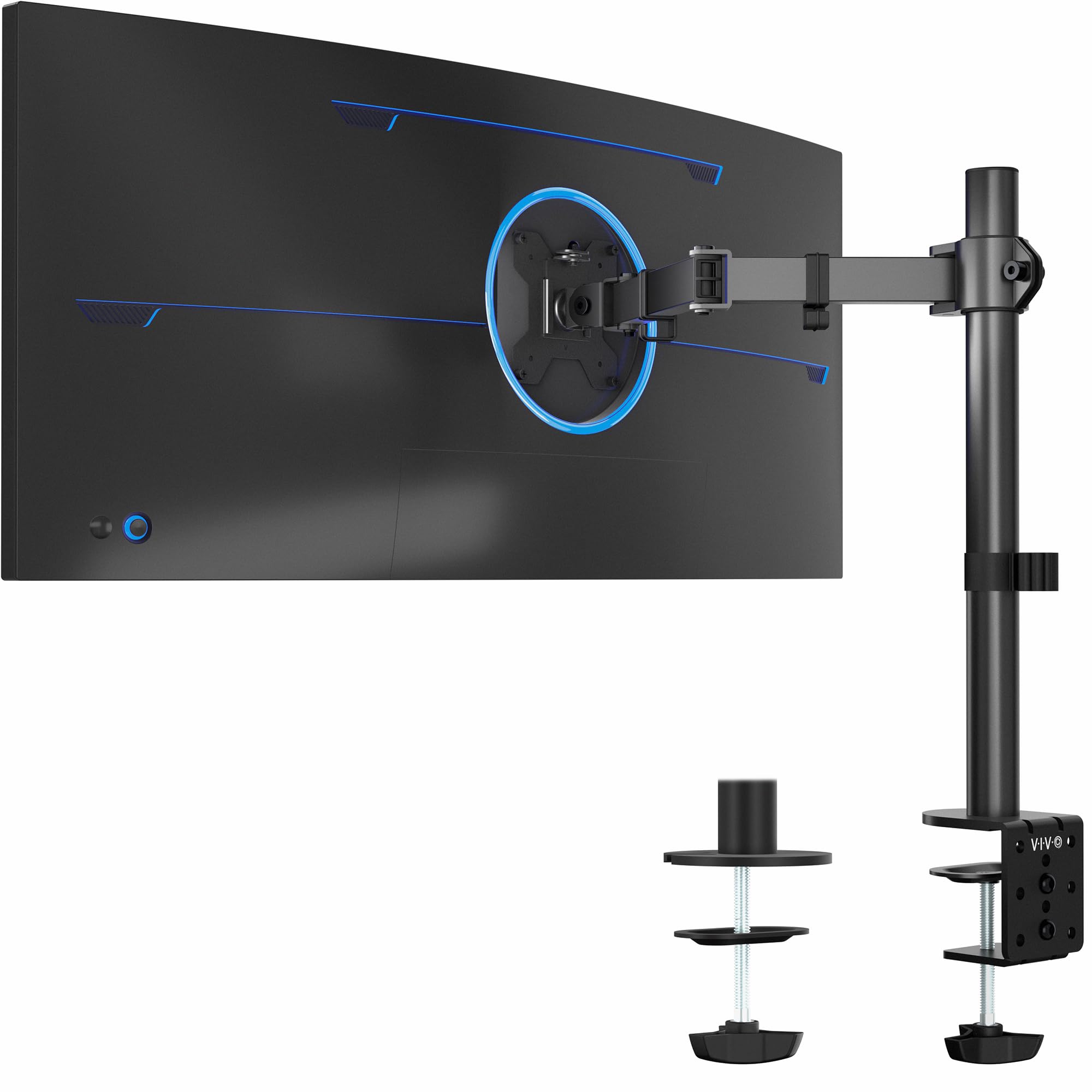
Consider the STAND-V001 if your monitor is larger than 27 inches or you want a desk-mounted arm with a wider stated screen range; first confirm the desk can accept its clamp or grommet setup.
- The STAND-V001 supports one monitor up to 38 inches and 22 pounds, with a VESA 75×75 mm or 100×100 mm pattern.
- It attaches by C-clamp or optional grommet mount, offers height adjustment up to 16 inches along its pole, and has tilt, swivel, and rotation adjustment.
- The STAND-V011H is a freestanding stand with a 40-inch pole and supports one monitor up to 27 inches and 22 pounds; its height adjustment uses a bolt.
Computer Monitor Arms alternative
16,000+ ratings
Read Amazon ReviewsVIVO STAND-V002FW Dual Monitor Desk Stand
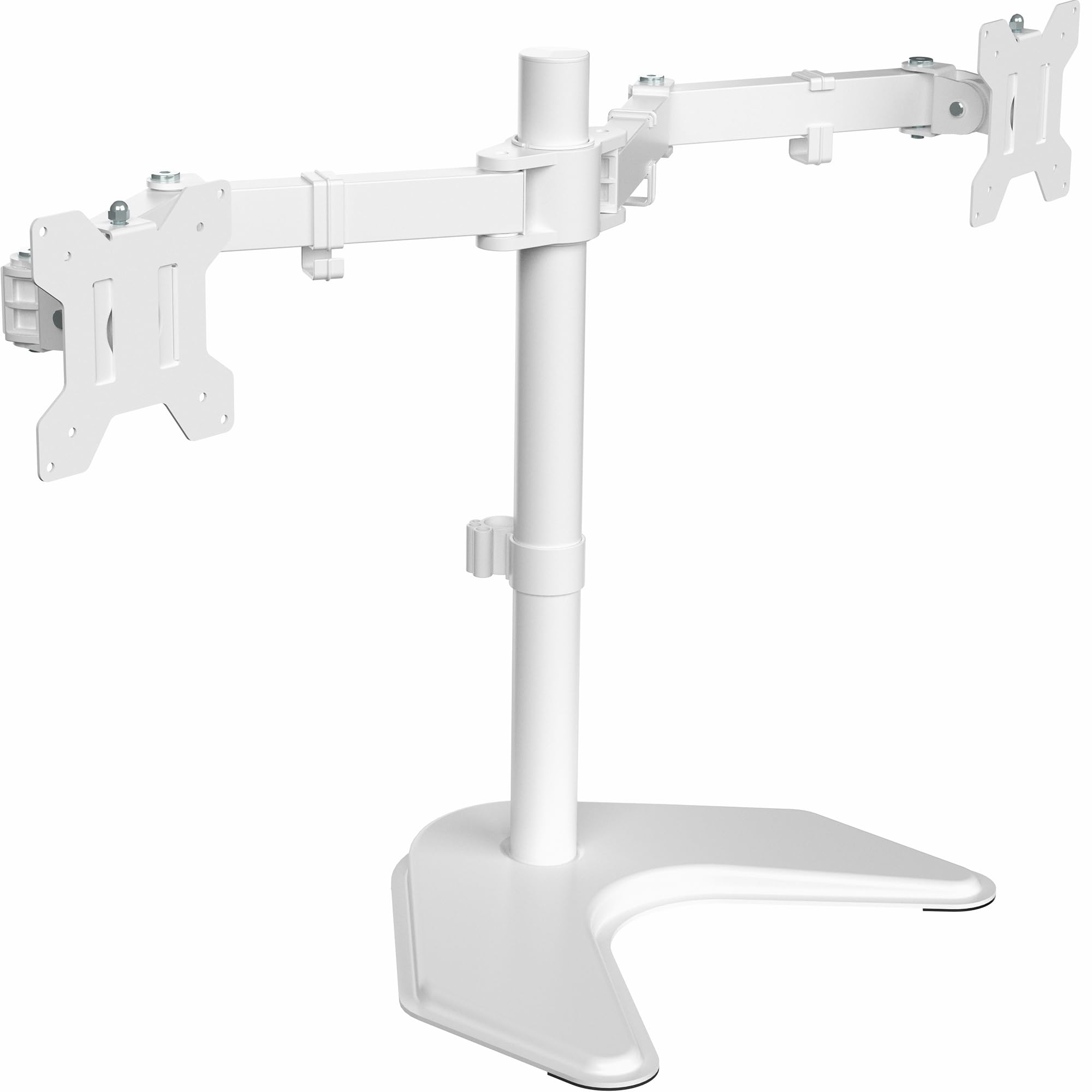
The STAND-V011H is the closer fit for a single screen and a particularly tall pole. Consider the STAND-V002FW if you want two compatible monitors on one freestanding base and can accommodate its larger base area.
- The STAND-V002FW is a freestanding stand for two monitors, each 13 to 27 inches and up to 22 pounds, with VESA 75×75 mm or 100×100 mm mounting holes.
- Its arms offer tilt, swivel, rotation, and height adjustment along the center pole; the base measures 13×10.5 inches and has padding underneath.
- The STAND-V011H holds one 13-to-27-inch monitor up to 22 pounds on a tall freestanding pole.
Is VIVO Extra Tall Stand Worth It?
The VIVO STAND-V011H is worth considering when a single compatible monitor needs a high, freestanding position and its main height can be set during installation.
Its 40-inch pole, angle adjustments, cable management, and open-top VESA plate make it a purposeful option for that kind of setup.
Confirm the monitor’s weight, size, and VESA pattern, and make sure the base fits your desktop. If you regularly change screen height or need support for a larger monitor, choose a design built around those needs instead.
Your review at a glance
5,000+ ratings
Read Amazon ReviewsVIVO STAND-V011H Extra Tall Single Monitor Desk Stand
A freestanding option for buyers who want to elevate one compatible monitor and adjust its viewing angle without clamping a mount to the desk.
- Designed for one monitor between 13 and 27 inches, up to 22 pounds, with a 75×75 mm or 100×100 mm VESA mounting pattern.
- A tall 40-inch center pole supports a high monitor position on a freestanding steel base.
- The bracket provides tilt from +45° to -45°, 180° swivel, and 360° rotation for landscape or portrait orientation.
- Vertical height adjustment is made along the center pole by loosening and tightening the bracket bolt; it is not designed for fluid, frequent repositioning.